
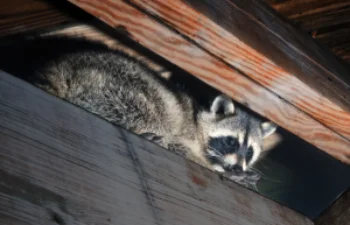
 Key Takeaways:
- Raccoons are not naturally aggressive toward people, but they can be dangerous if they feel cornered or are protecting their young.
- Louisiana neighborhoods provide raccoons with easy access to food, water, and shelter, making residential properties attractive places to live.
- Along with carrying diseases such as rabies in rare cases, raccoons cause costly damage by tearing into roofs, attics, chimneys, and electrical systems.
- Removing attractants and sealing entry points discourage raccoons from settling on your property.
- If a raccoon has moved into your home or is nearby and behaving aggressively, professional wildlife removal is the safest solution.
Seeing a raccoon wandering through your yard can be alarming. Their masked faces, sharp claws, and nocturnal habits give them a reputation of being aggressive animals. Although raccoons have the ability to defend themselves, they prefer to avoid people whenever possible.
Across Louisiana, raccoons venture into neighborhoods in search of food and shelter. Garbage cans, pet food, fruit trees, crawl spaces, and attics all provide resources that make residential properties attractive. Simply spotting a raccoon isn’t a reason to panic, but homeowners should never ignore consistent activity around their property.
Are Louisiana Raccoons Dangerous?
Raccoons are native to Louisiana and have adapted to rural and urban environments. In their natural habitat, they typically avoid human contact. Problems arise when they discover an easy food source or find a protected place to nest near a home.
Attempting to trap, corner, or scare away a raccoon yourself is extremely dangerous. These animals have sharp claws and powerful teeth, and they may bite or scratch if they feel threatened. In some cases, raccoons can also carry diseases, including rabies, making direct contact especially risky.
If you’re struggling with raccoons on your property, learn more about our professional wildlife services.
How Much Damage Can Raccoons Cause?
A raccoon doesn’t have to enter your home to become an expensive problem. Their strength and climbing abilities allow them to access areas many other nuisance animals cannot.
If a raccoon establishes a den near your property, the damage becomes more extensive the longer they stay. Common types of raccoon damage include:
- Tearing through soffits, vents, or roof openings to reach attics.
- Entering chimneys and damaging masonry or chimney caps.
- Chewing electrical wiring, increasing the risk of electrical failures and potential fire hazards.
- Destroying insulation, ductwork, siding, and other structural materials while creating nests.
Click the button below to leave your information.
How to Keep Raccoons Away from Your Property
While no prevention method is fully guaranteed, reducing food sources and eliminating shelter opportunities can make your Louisiana property less appealing.
Here are a few strategies you can use to discourage raccoon activity:
- Remove fallen fruit, spilled birdseed, pet food, and other outdoor food sources.
- Use tightly sealed trash containers that raccoons cannot easily open.
- Inspect your home’s exterior for damaged vents, loose siding, roof gaps, or other openings that could allow wildlife inside.
- Trim tree branches that provide easy access to your roof.
Professional Raccoon Removal for Louisiana Properties
If raccoons have already moved into your property, leave the removal process to our trained professionals. Attempting to remove a raccoon yourself increases the risk of injury and can make the situation worse, especially if young raccoons are present.
The wildlife specialists at Ja-Roy Pest Control use safe and humane raccoon removal methods to remove animals from homes and prevent them from returning. We also identify how the raccoons gained access and recommend exclusion measures to protect your property in the future.
If you’ve noticed raccoons around your Louisiana home or believe they’ve moved into your attic, crawl space, or chimney, contact us today for a free quote.


