
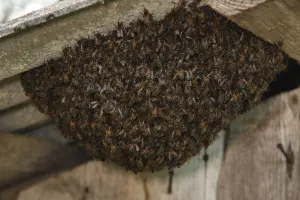
 Spotting a few bees around flowers, gardens, or blooming trees is usually nothing to worry about. Bees are important pollinators and are commonly active throughout the warmer months. However, when you begin seeing large numbers of bees consistently entering and exiting the same area of your property, that could be a warning sign of a nearby colony.
If you suspect bees have established a colony on your property, it’s best to contact a professional. The team at Ja-Roy Pest Control provides safe, environmentally responsible bee removal services designed to protect both your property and the surrounding ecosystem.
How to know if you have a bee infestation
Bee colonies can establish themselves inside wall voids, attics, chimneys, soffits, sheds, and other protected spaces around homes and businesses. Over time, an active colony can grow significantly in size, making removal more complicated.
Common signs of a bee problem include:
- Large numbers of bees are concentrated in one location
- Frequent bee activity around rooflines, vents, or exterior walls
- Bees entering and exiting small openings in a structure
- A persistent buzzing sound coming from inside walls or ceilings
- Visible honeycomb or wax buildup
- Stains on walls or ceilings caused by honey or wax accumulation
Call now or fill out the form below & a team member will reach out shortly!
The difference between bee, wasp, and hornet nests
Many homeowners have difficulty telling bees apart from wasps and hornets. While these insects may appear similar at first glance, the nests they build are very different. Learning how to recognize nest characteristics can help you better identify the type of stinging insect around your property.
- Honey Bee Colonies: Honey bees build colonies made from wax combs rather than paper-like materials. These combs are used to store honey, pollen, and developing bees. Honey bee colonies are often found inside hollow trees, wall voids, attics, chimneys, and other protected spaces where they can remain active for years and continue growing in size.
- Carpenter Bee Nests: Carpenter bees do not build large communal hives like honey bees. Instead, they tunnel into wood to create nesting galleries where they lay their eggs. Common signs of carpenter bee activity include perfectly round holes in decks, fences, siding, fascia boards, and other wooden structures.
- Wasp and Hornet Nests: Unlike bees, most wasps and hornets create nests from a paper-like material made by chewing wood fibers. Paper wasps often build small, open-comb nests beneath eaves and overhangs, while yellowjackets and hornets typically construct enclosed nests that may be found underground, inside wall voids, or attached to trees and structures.
Why Nest Identification is Important
Different stinging insects require different management approaches. Properly identifying whether you’re dealing with honey bees, carpenter bees, wasps, or hornets helps ensure the problem is addressed effectively. A professional inspection can determine the source of the activity and recommend the most appropriate solution for your property.
Why professional bee removal matters
Attempting to remove a bee colony without proper training can create unnecessary risks. Bees may become defensive when their nest is disturbed, especially when protecting their queen. In addition to the risk of stings, removing only the visible bees does not address the underlying colony. If honeycombs, wax, honey, or nesting materials are left behind, they can attract other pests and potentially cause property damage over time.
Even colonies that appear inactive should be approached cautiously. Hidden bees may still be present, and abandoned honeycombs can continue to create issues within walls, attics, or other structural spaces.
Environmentally responsible bee control
Bees play an important role as pollinators, so it’s important to handle them properly. Whenever possible, professional bee management protects beneficial pollinators, while resolving issues that threaten people or properties.
Whether you’ve discovered an active colony, noticed unusual bee activity, or found evidence of carpenter bee damage, the professionals at Ja-Roy Pest Control can inspect the situation and recommend the most appropriate solution. Our team addresses bee problems safely and prevents future nesting activity around your home or business.


