
 Rodents are among the most common pests found in Louisiana homes and businesses, but not every rodent problem is the same. While mice and rats share many behaviors, they differ in appearance, nesting habits, the damage they cause, and the best methods for eliminating them. Correctly identifying the pest is the first step toward effective control.
At Ja-Roy Pest Control, we help Louisiana property owners identify rodent infestations and provide professional rodent control solutions tailored to the specific species invading their homes. Whether you’ve noticed droppings in the pantry, scratching sounds in the attic, or gnaw marks around your property, understanding the difference between mice and rats can help you respond more quickly.
Quick Comparison: Mice vs. Rats
| Feature | Mice | Rats |
|---|---|---|
| Body size | 2½ to 4 inches | 7 to 10 inches |
| Weight | Less than 1 oz. | 7 to 18 oz. |
| Ears | Large compared to the head | Smaller than the head |
| Tail | Thin, long, about body length | Thick, scaly, often shorter than the body |
| Droppings | Small, pointed | Larger, capsule-shaped |
| Typical nesting areas | Walls, cabinets, attics | Crawl spaces, basements, garages, sewers |
Physical Differences
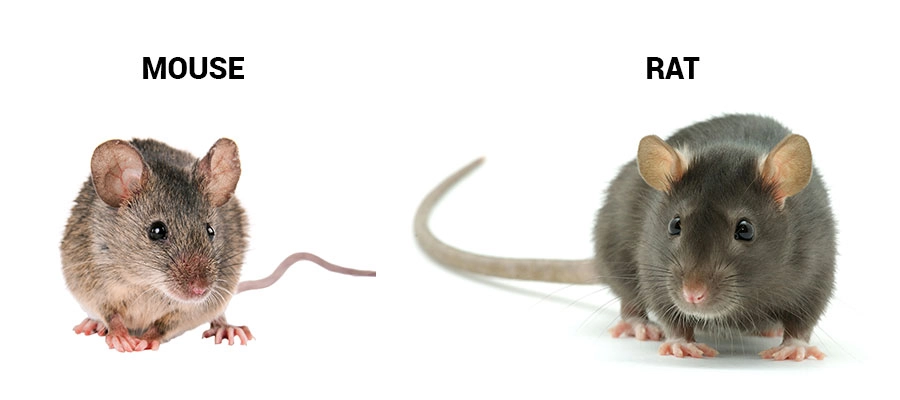
Although both rodents may appear similar at first glance, their physical characteristics make them relatively easy to distinguish. Paying attention to differences in size, body shape, and other features can help determine whether you are dealing with mice or rats.
Mouse Characteristics
Mice are much smaller and have physical features that help distinguish them from larger rodents like rats. Their small size and ability to squeeze into tight spaces make them one of the most common household pests. Common characteristics of mice include:
- Slender Bodies: Mice have slender bodies that help them slip through tight spaces.
- Large Ears: Mice have large ears relative to their heads, which gives them a distinctive look.
- Pointed Noses: Mice have pointed noses that help set them apart from rats.
- Long, Thin Tails: Mice have long, thin tails that are usually about the length of their bodies.
- Small Feet: Mice have small feet that leave subtle tracks, making them harder to spot.
In Louisiana, common species such as house mice and deer mice can invade homes and businesses in search of food, shelter, and nesting areas.
Rat Characteristics
Rats have a heavier appearance with features that make them easy to distinguish from smaller mice. Their larger size and distinct body structure are among the most noticeable differences between the two rodents. Key physical characteristics of rats include:
- Thick Body: Rats have a stockier, more muscular build that makes them appear much larger and heavier than mice.
- Blunt Nose: Unlike the pointed snout of a mouse, a rat’s nose is broader and more rounded.
- Smaller Ears: A rat’s ears are smaller in proportion to its head, giving it a less delicate appearance than a mouse’s.
- Thick, Scaly Tail: Rats have long, thick tails with a scaly texture that are noticeably sturdier than a mouse’s thin tail.
- Large Feet: Rats have larger feet that often leave more visible tracks and smudge marks in dusty or dirty areas.
In Louisiana, roof rats are common and are excellent climbers, while Norway rats are larger, heavier, and usually stay closer to the ground.
Call now or fill out the form below & a team member will reach out shortly!
Droppings: One of the Easiest Clues
If you find droppings, their size and shape can quickly narrow down which rodent is present. While both mice and rats leave behind similar signs, their droppings have noticeable differences that can make identification easier. Here are the key characteristics to look for:
Mouse Droppings
- Small Size: Mouse droppings are typically about the size and shape of a grain of rice, making them much smaller than rat droppings.
- Pointed Shape: Mouse droppings are dark in color and usually have pointed ends on both sides.
- Scattered Locations: Mouse droppings are often found scattered throughout cabinets, drawers, pantries, and along baseboards as they travel and search for food.
Rat Droppings
- Larger Size: Rat droppings are significantly larger and thicker than mouse droppings due to their larger body size and food consumption.
- Blunt Shape: Rat droppings are typically capsule-shaped with rounded or blunt ends rather than the pointed shape seen with mice.
- Concentrated Areas: Rat droppings are commonly found in larger groups near nesting areas, feeding locations, and along frequently used travel routes.
Avoid sweeping or vacuuming droppings dry, as this can release harmful particles into the air. Use proper cleanup procedures or contact a professional.
Where They Nest
Mice and rats seek food, water, and shelter, but they usually choose different nesting locations. Understanding where these rodents prefer to hide can provide important clues when identifying and addressing an infestation. The most common nesting locations for mice and rats include:
Mice Prefer Warm, Secluded Indoor Spaces
- Wall Voids: Mice often build nests inside wall cavities where they can stay hidden, protected, and close to potential food sources.
- Attics: Mice may nest in attics where insulation provides warmth and soft material for creating nests.
- Kitchen Cabinets: Mice commonly hide and nest inside kitchen cabinets because they offer shelter and easy access to food.
- Storage Rooms: Cluttered storage areas provide mice with quiet, undisturbed spaces where they can build nests and reproduce.
- Behind Appliances: Mice frequently nest behind refrigerators, stoves, and other appliances where warmth and hidden spaces are available.
Rats Usually Need More Space
- Crawl Spaces: Rats often use crawl spaces as nesting areas because they provide darkness, protection, and access to structural entry points.
- Basements: Rats may nest in basements where they can find shelter, moisture, and places to hide from people.
- Garages: Garages provide rats with plenty of hiding spots, stored materials, and potential food sources.
- Utility Rooms: Rats may settle near utility areas because pipes, equipment, and structural gaps provide convenient places to hide.
- Outdoor Burrows: Many rats create underground burrows near buildings, fences, or other protected areas where they can remain hidden.
- Dense Vegetation: Rats often nest in thick vegetation near homes and businesses, using shrubs, landscaping, and overgrown areas for cover.
Roof rats may also nest in trees, attics, and upper portions of structures because of their climbing ability.
Signs of a Mouse or Rat Infestation
Rodents are often heard before they are seen, making it important to recognize the warning signs they leave behind. Watch for these common indicators of mouse or rat activity:
- Scratching Sounds: Rodents often create scratching, squeaking, or scampering noises inside walls, ceilings, and other hidden areas as they move through your home.
- Gnaw Marks: Mice and rats constantly chew to keep their teeth from overgrowing, leaving behind gnaw marks on wood, plastic, insulation, and electrical wiring.
- Rodent Droppings: Finding droppings near food storage areas, cabinets, drawers, or along walls is one of the most common signs of an active infestation.
- Greasy Rub Marks: Rats and mice leave dark, greasy smudge marks along walls, baseboards, and other surfaces where their bodies repeatedly brush against surfaces.
- Nesting Materials: Rodents often shred insulation, paper, fabric, and other soft materials to create warm, protected nests.
- Damaged Food Packaging: Chewed boxes, bags, and containers may indicate rodents are accessing stored food inside kitchens, pantries, or storage areas.
- Unusual Odors: A strong, musky smell can develop when rodents nest indoors or when urine and droppings accumulate in hidden spaces.
- Rodent Sightings: Seeing a live or dead mouse or rat is a clear indication that rodents are present and may signal a larger hidden infestation.
Because rats are larger and stronger than mice, they often cause more noticeable damage, especially when chewing through wiring, insulation, and structural materials. However, both mice and rats can create serious problems when they establish themselves inside a home or business.
Why Identification Matters
Identifying whether you have a mouse or rat infestation is an important first step because these rodents behave differently and may require different control approaches.
Both pests can contaminate food, spread bacteria, damage property, and reproduce quickly, but understanding their unique habits helps create a more effective treatment plan. Some key differences that can impact rodent control include:
- Rapid Reproduction: Mice reproduce extremely quickly, allowing a small problem to become a large infestation in a short amount of time if it is not addressed promptly.
- Small Entry Points: Mice can squeeze through openings as small as ¼ inch, making it important to seal tiny gaps and cracks around your home.
- Cautious Behavior: Rats are more cautious than mice and may avoid unfamiliar objects, including newly placed traps, making professional control methods especially important.
- Larger Entry Points: Rats can squeeze through openings around ½ inch wide, allowing them to enter through gaps in foundations, doors, vents, and other structural areas.
- Different Control Methods: Using the wrong trap size, bait placement, or exclusion technique can reduce the effectiveness of rodent control efforts and allow the infestation to continue.
Because mice and rats require different approaches, professional rodent control can help identify the species present and determine the most effective treatment strategy.
Professional Mouse and Rat Control in Louisiana
Whether you’re dealing with mice, rats, or you’re simply unsure which rodent has invaded your property, professional identification is the fastest path to an effective solution.
Ja-Roy Pest Control provides comprehensive rodent inspections and customized treatment plans for homes and businesses throughout Louisiana. We identify the species causing the problem, locate nesting areas and entry points, eliminate the infestation, and recommend exclusion measures to help prevent rodents from returning.
If you suspect rodents, contact Ja-Roy Pest Control today for a professional inspection and lasting protection.


