
 Drywood termites can be one of the most damaging pests lurking in Louisiana homes. Recognizing the signs (like swarming termites, tiny pellet droppings, or wood that looks blistered) can help you stop these invaders before they cause costly harm.
With over 50 years of experience in termite control, we’ve seen how drywood termites can quietly turn a beautiful home into a costly headache for families across Louisiana.
What Exactly Are Drywood Termites?
Drywood termites are stealthy insects that thrive inside dry wood, making your home the perfect place to live and feast. Unlike subterranean termites that require moist soil, drywood termites survive entirely within dry wood, gathering moisture from the wood itself. This means they can infest places like roof supports, hardwood floors, or furniture without needing to venture outside.
These termites vary in size depending on their role. Soldier termites, which defend the colony, measure around three-eighths of an inch, while reproductive termites that start new colonies are about half an inch long. Their coloring usually ranges from pale brown to a yellowish or darker hue.
Drywood Termites vs. Subterranean Termites: What’s the Difference?
The main difference between drywood termites and subterranean termites lies in their habitat and survival needs. Subterranean termites live underground and require contact with soil and moisture, often traveling through mud tubes to reach your home’s wood. Drywood termites, however, don’t need soil or water and live entirely inside dry wood above ground.
Subterranean termites usually enter through your foundation, but drywood termites can fly straight into attic vents or slip through small cracks around windows and doors. This allows them to infest any wooden part of your home, from attic beams to furniture.
Also, drywood termites eat across the grain of wood, hollowing out both soft and hard layers, which weakens the structure. This tunneling creates smooth galleries that can seriously compromise the integrity of your home.
Warning Signs of Drywood Termite Infestation
- Swarming termites are the most noticeable sign since winged adults search for new places to establish colonies. Spotting these swarms means you likely have an active colony nearby.
- Many homeowners overlook the tiny, rice-shaped droppings that drywood termites push out through small exit holes in infested wood. These pellets often collect beneath affected areas.
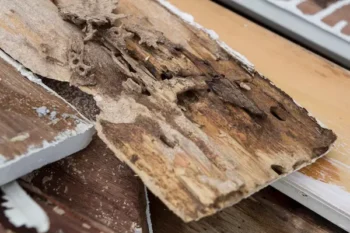
- Wood that appears bubbled, blistered, or sounds hollow when tapped can be a strong indicator of termite damage. You might also notice doors sticking or windows that don’t close properly due to warped wood.
Because drywood termites feed quietly inside wood, visible damage often means they’ve been present for a long time. That’s why routine inspections by termite professionals are so crucial.

Are Drywood Termites Difficult to Eradicate?
Drywood termites rank among the toughest pests to eliminate because they nest deep inside wood, often in hidden spots like wall voids or attic beams. Simply spraying the surface isn’t enough to reach these hidden colonies.
They can spread throughout your home’s wooden framework, establishing satellite colonies wherever they find suitable wood. Unlike subterranean termites, they don’t rely on soil contact, so they can infest multiple areas independently.
What’s the Most Effective Treatment for Drywood Termites?
The best termite treatment depends on how extensive the infestation is and where the termites are located in your home.
Treatment depends on how widespread the infestation is. For small, localized problems (like a single door frame or piece of furniture) targeted methods such as injecting termiticides or using expanding foams can be effective.
For larger infestations that affect multiple areas, whole-structure fumigation is usually the best choice. Although it requires temporarily vacating your home, fumigation ensures that every termite in every nook and cranny is eliminated by penetrating deep into the wood where sprays can’t reach.
Our Approach to Drywood Termite Control
We start with a thorough inspection of your entire property, searching every corner, from visible beams to hidden spots behind trim and pictures.
Based on our findings, we craft a customized treatment plan. For minor infestations, we use precise spot treatments. For more severe cases, we recommend tent fumigation to guarantee complete eradication.
Our service doesn’t stop once the termites are gone. We schedule follow-ups to confirm the infestation is fully cleared and advise you on how to prevent future problems, including sealing entry points and minimizing conditions that attract termites.
Protect Your Louisiana Home with Ja-Roy Pest Control
Choosing the right termite control expert can be overwhelming, but Louisiana homeowners trust us because we protect their homes with proven, top-tier solutions.
Don’t let drywood termites threaten your home’s value and your peace of mind. The earlier you act, the less damage you’ll face. Contact Ja-Roy Pest Control today for a professional termite inspection and keep your Louisiana home safe year-round.


