
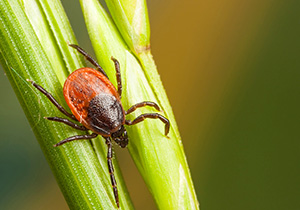
 Key Takeaways – Minimizing Your Tick Risk
- Ticks arrive on properties by hitching rides on hosts like deer and rodents.
- Maintaining short grass and removing leaf piles eliminates breeding grounds and hideouts.
- Light-colored, smooth clothing and tucking pants into socks make ticks easier to spot.
- Showering within two hours and checking skin hot spots reduces the risk of disease transmission.
- Regular pet inspections and vet-approved treatments are essential, though some dog products are lethal to cats.
- Professional extermination and tools like tick tubes can eliminate thousands of eggs and established populations.
Ja-Roy’s Podcast Hosts Discuss Eliminating Ticks
Listen to the podcast hosts here at Ja-Roy Pest Control discuss ways you can eliminate ticks and the dangers they pose. Also, check out our video guide!
How to Prevent and Eliminate Ticks
There are many reasons why dealing with ticks can be challenging. They’re tiny, hard to spot, and they reproduce very quickly. The good news is that, with the right approach, you can reclaim your yard and protect your pets and loved ones from their disease-spreading bites.
Let’s discuss a few key areas of how to prevent ticks, eliminate them, and minimize their overall impact:
- How to Prevent Tick Infestations by Making Your Yard Less Tick-Friendly
- Understanding Where Ticks Come From
- Avoiding Tick Bites When You’re Outside
- How to Check Yourself for Ticks After You Go Outside
- Keeping Your Pets Safe from Ticks
- How to Eliminate Ticks in Your Yard
Let’s dive right in. Here are some tips from Ja-Roy Pest Control‘s expert tick exterminators on how to reduce your tick risk on your property.
Call now or fill out the form below & a team member will reach out shortly!
How to Make Your Yard Less Tick-Friendly
Many properties have a small tick presence. It’s not necessarily a problem when their population is low. However, when ticks are allowed to reproduce and spread across the entire property, it turns a minor infestation into a major problem.

Fortunately, there are some things you can do to make your yard less tick-friendly. This will reduce the overall impact they have:
- Mow Regularly: Ticks thrive in tall grass. Keep your lawn short to increase sun exposure and reduce humidity at the ground level.
- Clear the Perimeter: Create a 3-foot wide barrier of wood chips or gravel between your lawn and wooded areas. This creates a dry “no-man’s land” that ticks find difficult to cross.
- De-Clutter: Remove leaf piles, brush, and tall weeds. These are prime breeding grounds and hideouts for tick larvae.
- Let the Sun In: Prune low-hanging tree branches and overgrown shrubs to reduce shady, damp spots in the garden.
Where Do Ticks Come From?
OK, but where do ticks come from in the first place?
Ticks aren’t very mobile. Sure, they can walk, and they’re surprisingly fast when they smell a potential new host nearby – but they can’t go long distances. In other words, ticks are highly unlikely to ever arrive on your property because they walked there.
They’re much more likely to show up on a host – an animal they latched onto. When that animal travels onto your property, ticks may jump off and make your property their new home, laying thousands of eggs. That’s how most tick infestations begin. Two of the biggest culprits when it comes to transporting ticks onto your property include:
- Deer: They’re the primary transport system for adult ticks, including the deer tick. If you frequently notice deer on your property, ticks are likely lurking, too. Consider adding tall fencing to keep the deer out or planting deer-repelling plants.
- Rodents: Rats and mice are small, but they can still be covered in large numbers of ticks. In fact, did you know that ticks get Lyme disease from mice – not deer? If you have a rodent issue, be aware that ticks may also be present. To prevent rodents on your property, eliminate bird feeders with seeds, pick up fallen fruit, and try to eliminate as many potential rodent food sources as possible.
How to Prevent Tick Bites
The most important component of preventing tick bites is situational awareness. Understand where ticks are likely to be found and take appropriate precautions when you know you may encounter them. And then when you’re done spending time in a tick-prone area, be sure to check yourself and loved ones immediately afterward.
The three key areas to help prevent tick bites and minimize the impact are the clothes you wear, the insect repellents you use, and checking yourself for ticks afterward.
How to Dress Appropriately If You’re in a Tick-Prone Area
- Wear Long Sleeves and Pants: Tuck your shirt into your pants and your pants into your socks. It looks silly, but it forces ticks to stay on the outside of your clothes where you can see them.
- Choose Light Colors: Ticks are dark and small; wearing white or khaki makes them much easier to spot before they reach your skin.
- Choose Smooth Fabrics: Ticks find it harder to grip onto slick materials like spandex or tightly woven nylon than they do onto knits or denim.
Which Bug Repellents Work Against Ticks?
For best results, we recommend against “all-natural” or “organic” bug repellents. They’re less chemically harsh and can be a good option for kids or sensitive individuals, but this also tends to mean they have less of an effect on ticks themselves. If you can tolerate DEET or picaridin-based repellents, you’ll see better results.
- Use EPA-Registered Repellents: Apply sprays containing DEET or picaridin to exposed skin.
- Treat Gear with Permethrin: Use 0.5% permethrin spray on boots, clothing, and camping gear. This doesn’t just repel ticks—it kills them on contact. It remains effective even after several washings.
How to Check Yourself for Ticks Afterward
If a tick latches onto you and bites, it’s important to remove it as soon as possible. The longer they remain latched, the greater the risk of tick-borne disease transmission.
- The “Sticky” Check: Run a lint roller over your clothes after being outside to pick up any loose ticks you might have missed.
- Shower Promptly: Showering within two hours of coming indoors can wash off unattached ticks and provides a good opportunity for a full-body check.
- Full-Body Inspection: Check “hot spots” carefully: under the arms, in and around ears, inside the belly button, behind the knees, in the hair, and between the legs.
How to Keep Your Pet Safe from Ticks

Your furry companions are at even greater risk of tick bites than you are. For example, dogs are so closely associated with ticks that one of the most common species – the American dog tick – is named after them.
Ticks easily get lost in all of that fur, and it can be nearly impossible to find them. Worse yet, dogs and cats can also catch many tick-borne diseases like Lyme disease – along with some additional parasites that don’t affect humans.
So, the stakes are high. Here’s what you can do to reduce your pet’s tick risk:
- Use Vet-Approved Preventatives: Oral chews, topicals, or collars year-round to kill ticks on contact or after biting.
- Perform Daily Checks: Feel for bumps and inspect hidden spots like ears, toes, armpits, and under the collar.
- Keep Pets on Cleared Trails: This minimizes exposure to tall grass and leaf litter, where ticks congregate.
- Use Species-Specific Products Only: This is very important, as many dog-safe treatments (like those containing permethrin) are lethal to cats.
- Remove Attached Ticks Promptly: Use fine-tipped tweezers by pulling straight up to ensure the mouthparts are fully extracted. If the mouthparts remain latched, it can lead to infection.
How to Get Rid of Ticks in Your Yard
Once ticks are on your property, they can be tough to eliminate. This is because they’re tough to find and female ticks can lay thousands of eggs. But here’s what you can do:
- Deploy “Tick Tubes” in Shady Areas: These contain permethrin-soaked cotton that mice use for bedding, killing ticks on the rodents without harming them or your yard.
- Apply a Perimeter Pesticide Treatment: using products containing bifenthrin or permethrin along the edges of your yard in mid-spring and early summer.
- Work with an Experienced Tick Exterminator: An experienced tick exterminator will have state-of-the-art tick control products and know exactly where to find them. Working with a professional is the quickest and easiest way to eliminate ticks on your property.
Comparing DIY Tick Control and Professional Tick Extermination Services
Is professional tick control worth it? We think so. Here’s why:
| DIY Tick Control | Professional Services (Ja-Roy Pest Control) | |
| Effort & Time | High. Requires regular mowing, clearing debris, creating barriers, and manual host management. | Low. You schedule an inspection, and experts handle the location, treatment, and removal. |
| Speed | Slow. Relies on incremental changes over time; manual methods take time to reduce populations. | Fast. The quickest way to eliminate established populations using powerful, efficient methods. |
| Effectiveness | Moderate. Hard to find all ticks (tiny, hide well); natural repellents are often less effective. | High. Experts use “state-of-the-art” products and know exactly where to apply them for maximum impact. |
| Cost | Can vary. Involves materials and your time. Potential for repeat costs if DIY fails. | Moderate. An upfront investment, but efficient elimination may reduce long-term costs and medical risks. |
| Safety | Requires self-education. Risk of misapplying chemicals (e.g., using dog products lethal to cats) or missing areas. | Expert-Guided. Professionals ensure products are applied safely and correctly to minimize risk to family and pets. |
We Get Rid of Ticks in Louisiana!
If ticks have invaded your yard, it’s easy to feel overwhelmed. These tiny arachnids are tough to eliminate, and the risks are considerable. From Lyme disease to Alpha-Gal syndrome, a meat allergy caused by lone star ticks, ticks can carry a variety of life-altering diseases.
Acting promptly is crucial for the well-being of your family and pets. The good news is, if you need help, the southern Louisiana tick control experts at Ja-Roy Pest Control are here to help.
We have decades of experience in tick extermination in Louisiana – and we can help you. Ready to get started? To schedule an inspection, reach out to Ja-Roy Pest Control today.
Back to Tick Exterminators – Control – Removal


