
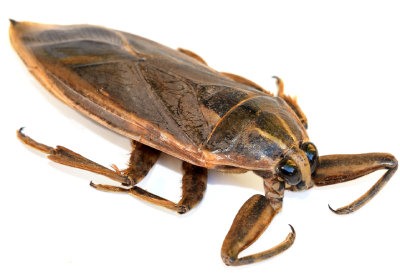
 Cockroaches are a fact of life here in Louisiana. And depending on where you live here in The Pelican State, so are water bugs. These two notorious pests have such a strong resemblance that they’re commonly mistaken for each other. Oriental cockroaches – a specific species of roach – look so similar to waterbugs that most people don’t realize they’re completely different creatures.
So, is it a water bug or a cockroach?
Let’s discuss:
- Are Cockroaches and Water Bugs the Same Thing?
- How to Tell Cockroaches and Water Bugs Apart by Looking at Them
- Differences in Behavior Between Water Bugs and Roaches
- Which Is More Dangerous – Cockroaches or Water Bugs?
If you have any questions, give us a call. The roach exterminators at Ja-Roy Pest Control are here to help!
Our Podcast Below Provides All the Details
Prefer to listen? The expert pest control technicians at Ja-Roy Pest Control talk about the differences between these two pests. Also, check out our video guide!
Call now or fill out the form below & a team member will reach out shortly!
Is a Water Bug a Cockroach?
No. Although easily mistaken for one, and even though many people simply refer to cockroaches as water bugs, they’re definitely not the same.
Cockroaches and Water Bugs – Similarities and Differences
Water bugs are part of the true bug family and belong to the insect order Hemiptera. Just as their name suggests, water bugs are aquatic insects. They rarely venture away from lakes, ponds, and other bodies of water. Also known as “toe biters” water bugs are infamous for defensive biting when disturbed or stepped on.
Cockroaches are also insects, but they belong to the order Blattodea, making them a closer relative to termites than water bugs.
How to Tell Water Bugs and Cockroaches Apart by Looking at Them
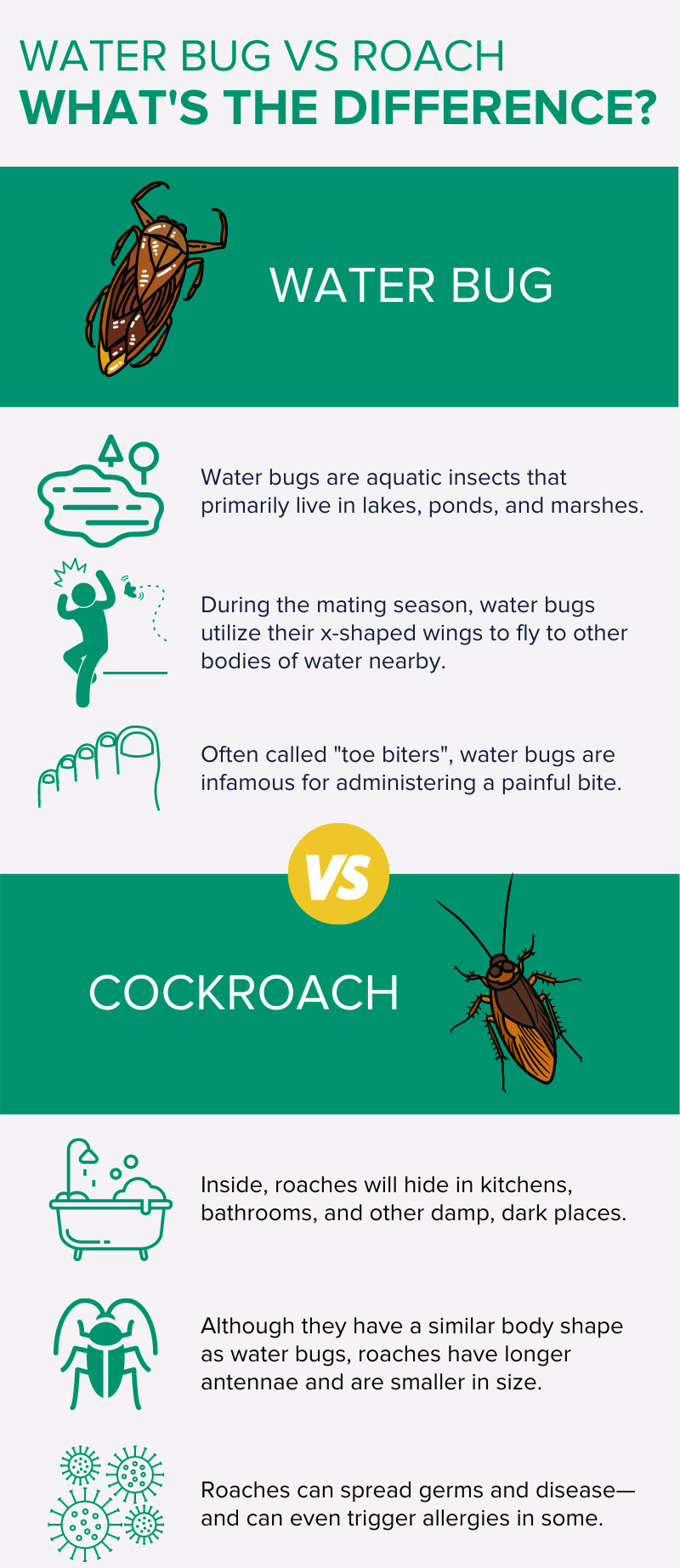
The first clue is the size. Water bugs are quite large – bigger than the vast majority of cockroaches you’ll find. So if the bug you’re looking at is big, there’s a good chance it’s a waterbug. Of course, there’s some overlap between large roaches and small water bugs, so we also recommend looking at all of these factors:
- Size: Water bugs are massive (2 to 4 inches). Most cockroaches are smaller (1 to 2 inches).
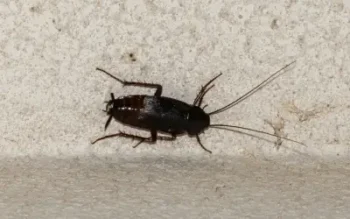
- Color & Texture: Water bugs are usually matte, dull grayish-brown. Cockroaches have a more tan or reddish-brown color. Oriental cockroaches are often a glossy black or deep maroon color, making them harder to distinguish from water bugs.
- Antennae: Cockroaches have long, whip-like antennae. Water bugs have very short, almost invisible antennae.
- Front Legs: Water bugs have thick, pincer-like front legs for grabbing prey. Cockroaches have six thin, spiny legs built for running.
- Wings: True water bugs have large wings that fold into a “V” or diamond shape on their back. Cockroaches have very short wings or no visible wings at all.
Differences in Behavior Between Water Bugs and Cockroaches
- Movement: Cockroaches are skittish. They will often flee and hide if frightened. Water bugs have a predatory nature, so they’re less likely to run. They are slower on land and can be aggressive if poked.
- Habitat: Cockroaches are more likely to be found in homes, especially in kitchens, behind appliances, or in dry wall voids. Water bugs are almost exclusively found in or near water – pools, ponds, creeks, marshes. Oriental cockroaches are easily mistaken for water bugs because they also love damp or humid environments.
- Biting: Cockroaches can bite, but they rarely do. Water bugs are often called “toe-biters” for their ability to deliver a very painful nip with their beak.
Are Water Bugs or Cockroaches a Danger to My Home?
Although you’re much more likely to get bitten by a water bug, cockroaches are a much bigger risk to your health and safety. They contaminate food sources and carry bacteria, which contain diseases like salmonella.
Let’s compare the risk factors of roaches and water bugs in these key areas:
Spreading Bacteria & Pathogens
- Cockroaches: High risk. They are “mechanical vectors” for disease, meaning they carry bacteria like Salmonella, E. coli, and Cholera on their legs from sewers and trash directly onto your food or counters. Oriental cockroaches carry high risk because they live in sewage and decaying organic matter. American cockroaches and German cockroaches are also highly unsanitary and can quickly spread germs and bacteria.
- Water Bugs: Low risk. They are aquatic predators and generally do not carry human-transmissible diseases or infest food supplies.
Allergies & Asthma
- Cockroaches: Significant risk. Their droppings, saliva, and shedding skin contain proteins that are major triggers for asthma and chronic allergies, especially in children.
- Water Bugs: Minimal risk. They do not leave behind the same volume of allergenic debris in the home environment.
Physical Threat (Biting)
- Cockroaches: Minimal risk. They can bite but rarely, if ever, bite humans.
- Water Bugs: Moderate to High risk. They have a sharp, needle-like beak. If stepped on or handled, they deliver a very painful (though non-toxic) bite that can cause localized swelling.
Infestation Potential
- Cockroaches: Severe. They are “hitchhikers” and prolific breeders. Seeing one often means there are dozens or hundreds hidden in the walls, appliances, or plumbing.
- Water Bugs: Zero risk. When they come inside, it’s accidental. If you find one in your house, it likely took a wrong turn after a heavy rain or was attracted to a porch light. They cannot survive or breed indoors without a large body of water and live prey.
| Risk Factor | Cockroaches | Water Bugs |
| Disease Spread | High | Low |
| Bite Pain | None | High |
| Allergy Trigger | Yes | No |
| Home Infestation | Yes | No |
Your Louisiana Roach Exterminators
Roaches and water bugs are two similar-looking, but very different, pests that are common to Louisiana. Despite how similar they look, it’s important to be able to tell them apart because roaches are significantly more dangerous than water bugs – and getting rid of them often takes an experienced roach control expert.
When it comes to health risks, roaches are one of the most dangerous pest problems. Cockroaches can spread diseases including E. coli, Salmonellosis, Staph infections, and Typhoid fever, primarily through contamination of food and surfaces.
When should you call a roach exterminator? We recommend doing so at the first sign of infestation. You don’t want to give the infestation a chance to take hold. Ja-Roy Pest Control can keep cockroaches out with our expert services, including removal and prevention.
Reach out to us today to schedule an experienced roach exterminator or for a free estimate.
Back to Cockroach Exterminators – Control – Removal


