
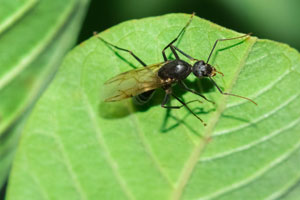
 When it comes to flying ants versus termites, it’s difficult to tell them apart unless you know what to look for. The quick answer is that these three criteria can be instrumental in helping you identify which you’re dealing with:
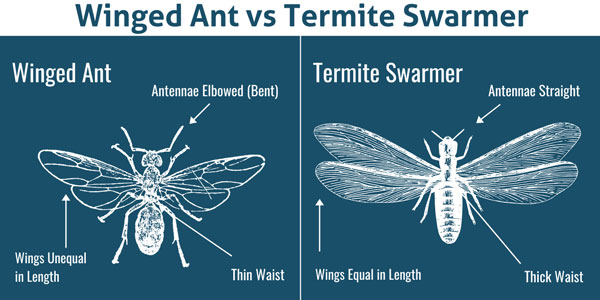
- Physical appearance: Termites have a more uniform body structure, shorter legs, and four wings of identical size and shape. Ants have a waist section that narrows at the center, and their sets of wings are unequal in length.
- Visibility: Ants are much more likely to be seen than termites. Termites spend most of their time underground or deep within the structure of a house. So if you’re seeing them frequently, it’s likely ants.
- Damage and Evidence: Termites eat wood, which means they do much more extensive damage. Carpenter ants will also damage wood, but they don’t eat it – they excavate into wood to create their habitat. Most ants don’t damage wood.
Now that we’ve discussed the basics, let’s dig deeper into how to tell the difference between ants and termites.
Learn with Our Latest Podcast Episode
Call now or fill out the form below & a team member will reach out shortly!
Dig Deeper into the Differences Between Flying Ants and Termites
Have you seen ants with wings on your property? It could be a few possibilities, ranging in severity from termites to carpenter ants to harmless ants. When you do see them, it’s important to figure out what exactly you’re dealing with, as that will tell you what to do next.
If you strongly suspect termites, we recommend getting a professional termite inspection.
Physical Appearance – What’s the Difference?
To the untrained eye, flying ants and termites look very similar. But once you’ve spent some time learning about the differences, it’s actually pretty easy to tell the difference, just by looking at them.
Body Shape
- Ants: Distinctly segmented body with a very narrow, pinched waist, creating the appearance of three separate body parts: the head, thorax, and abdomen.
- Termites: Broad-waisted body that appears more uniform and cylindrical, lacking the noticeable narrowing between the thorax and abdomen.
Antennae
- Ants: Antennae that are “elbowed” or bent in the middle.
- Termites: Straight antennae.
Wings
- Ants: Two pairs of wings, with the front pair noticeably larger than the hind pair.
- Termites: Two pairs of wings that are equal in size and shape. These wings are also typically much longer than the termite’s body and are fragile, often breaking off easily.
Color
- Ants: Bary in color depending on the species, but are commonly black, brown, or reddish.
- Termites: Typically light in color, often appearing white or creamy, and can sometimes be translucent.
Visibility – What’s the Difference?
It’s not just about comparing one specimen to another. You can also learn a lot by noting where you see them, what they’re doing, and how often they’re out in the open. Here are some key differences in how ants and termites make themselves visible:
Foraging Behavior
- Ants: You’re more likely to see ants out in the open. They often march in long trails across your kitchen counters, floors, and walls in search of food and water.
- Termites: They can be quite secretive. They typically travel within mud tubes they build or inside the wood they are consuming, staying hidden from view.
Nesting Habits
- Ants: Nests can sometimes be obvious. You might see a mound of soil in your yard or notice sawdust-like material (frass) pushed out of woodwork.
- Termites: Usually concealed. Subterranean termites build their nests deep underground, while drywood termites live entirely within the wood they infest, making their colonies much harder to spot.
Swarming
- This is one area where flying ants and termites are similar. Both ants and termites have reproductive swarmers that grow wings and fly to start new colonies. Seeing winged swarmers is a strong sign that they’re trying to establish a colony nearby, and you should closely monitor the situation to see if more emerge. These swarms don’t last a long time – from less than an hour to a couple of hours, typically.
Damage and Evidence – What’s the Difference?
One of the best ways to tell the difference between ants and termites is to look at what they leave behind, from the damage they do to the other subtler signs of their presence. Here’s what you should look for:
Damage
- Ants: Most ants don’t cause damage. Carpenter ants are the exception. They excavate and tunnel through wood to create nests, but once they’re done, they stop. Carpenter ant galleries are smooth and finished, almost like they’ve been sanded down.
- Termites: Termites are ravenous, and they eat cellulose, the primary component of wood. This means they can cause extensive and costly structural damage to your home by eating away at beams, flooring, and walls. Termite damage has a rough, ragged feel and is often packed with soil and mud.
Visible Debris
- Ants: Ants will leave ant trails, which are sometimes visible in the light. Carpenter ants leave behind a sawdust-like material called frass, which they push out of their nests. This frass may also contain parts of dead insects. You’ll often find it in small piles below infested wood.
- Termites: Subterranean termites leave behind mud tubes, which are pencil-sized tunnels they build from soil, wood particles, and saliva to travel from their underground colonies to their food source.
Discarded Wings
- After their swarms, both flying ants and termite swarmers shed their wings. You might find small piles of these discarded wings on windowsills, near doors, or in spiderwebs. While both leave wings, the presence of many wings of equal size is a strong indicator of a termite infestation.
Need Help Spotting the Difference Between Ants and Termites?
 While both insects share the common trait of having wings during certain stages of their lives, their life cycles and behaviors differ significantly. Understanding these differences is crucial for Louisiana homeowners.
We hope this article has helped determine whether it’s termites or swarming ants you’re dealing with. With termites, early detection is key. If you’re still not sure, don’t hesitate to give us a call! Our experienced exterminators will perform a thorough inspection, give you the full picture of what’s going on, and recommend your best course of action.
Whether you need termite control or ant control, the experts at Ja-Roy are here to help! We have been working with homeowners in Louisiana since 1971. If you suspect a termite or carpenter ant infestation, contact the pest experts at Ja-Roy today!


